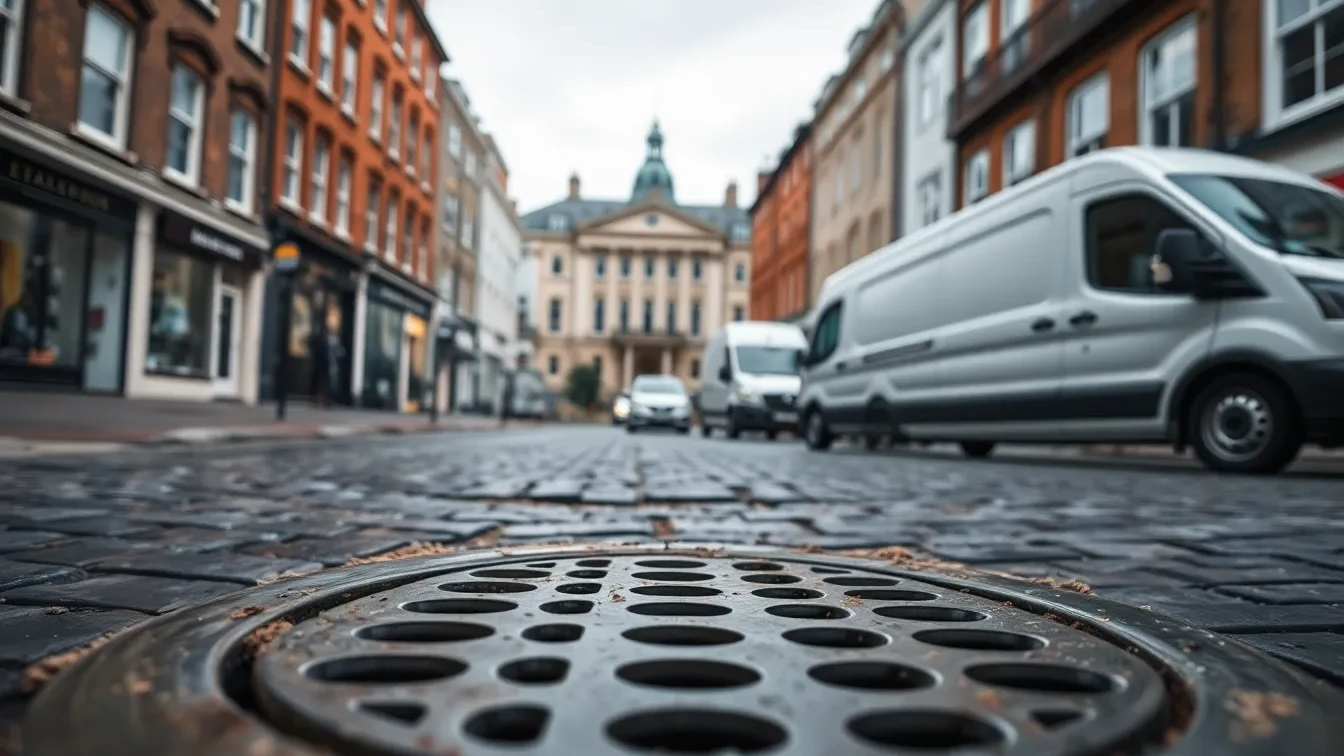
Drainage in Portsmouth
Portsmouth sits mostly on Portsea Island, one of the UK's most crowded places. Much of the island consists of reclaimed land near sea level, with a high water table. Because tides from the Solent and both harbours push in constantly, this flat, waterlogged geography shapes drainage across the city.
Dense Victorian terraces in Fratton, Copnor, Landport, Buckland, and Eastney make up much of Portsmouth's housing stock. Many still rely on original clay drains that feed combined sewers, carrying both foul and surface water together. Because these old sewers overload easily, heavy rain can force water back into low-lying homes. This risk grows when a storm coincides with a high tide.
Because Portsea Island is so flat, drainage pipes have very little fall. This lets silt and debris settle, so blockages build up faster than on steeper ground. The high water table also speeds rust damage in older cast iron pipes and lets groundwater seep through failed clay joints. Homes near the harbours and seafront face a genuine risk of tidal backflow.
Portsdown Hill, the chalk ridge north of the city, is the only big high ground nearby. Surface water from the hill drains down towards Cosham, Hilsea, and the island's northern edge. This adds extra load during heavy rain, although the hill itself is ordinary chalk downland, not moorland.
Southern Water runs Portsmouth's public sewer network. Since old sewers, low ground, and a growing population combine, extreme weather can stretch the system. Individual owners still need to manage their own drainage well.
Our engineers know Portsmouth's drainage character well. Because the island's terraced streets rely on ageing clay pipes, we work on them often. We also manage tidal effects near the harbours and keep flat drainage runs clear of silt. This experience covers everything from Victorian terraces in Fratton to modern flats at Gunwharf Quays.